

When most travelers think of Quito, they picture colonial churches, cobblestone plazas, and Baroque domes. And they’re right: Quito’s Historic Center is one of the most beautiful in the world. But there’s something very few discover before arriving: less than an hour from where you’re staying, the city blends into extraordinary natural surroundings.
Quito is perhaps the only capital in the world with active snow-capped volcanoes peeking above the rooftops, cloud forests home to hundreds of hummingbird species, and volcanic craters inhabited since pre-Columbian times. All of this is part of the same destination.
From our Rincón Familiar Hostel Boutique in the heart of the Historic Center, you have direct access not only to a UNESCO World Heritage Site but also to one of the most biodiverse regions on the planet. Here are the 8 protected areas you can visit during your stay and one more reason to extend your trip.
Before you explore: Always remember to go with a certified guide, stay on marked trails, do not pick plants or disturb animals, and take your trash back with you. These reserves exist thanks to those who care for them. You, too, can be part of that story.
1. Yanacocha Biological Reserve
The hummingbird reserve, just outside Quito
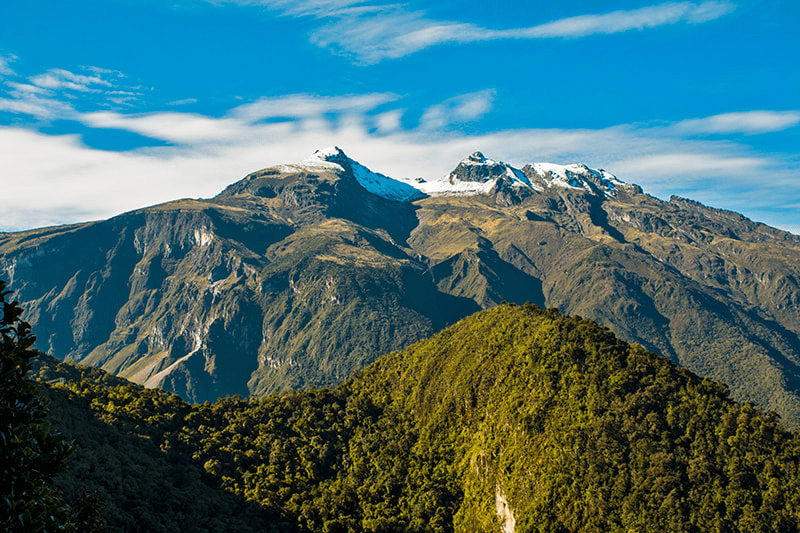
On the western slope of the Guagua Pichincha volcano, just 30 minutes north of the city, lies one of Ecuador’s most accessible and stunning reserves. Yanacocha protects 1,203 hectares of high Andean forest and páramo between 3,200 and 4,100 meters above sea level (Pichincha es Turismo, 2019).
Its fame among travelers from around the world stems from a single reason: it is one of the best places on the planet to observe hummingbirds. More than 17 different species of these tiny aerial acrobats live here, including the black-chested sunbird, Quito’s official bird since 2005 and an endangered species. Andean condors, spectacled bears, and páramo wolves can also be spotted (Ministry of Tourism, 2013).
📍 Distance: 30 min from Quito
Radio Sucre (2024)
2. Pululahua Geobotanical Reserve
A inhabited volcano — unique in the world
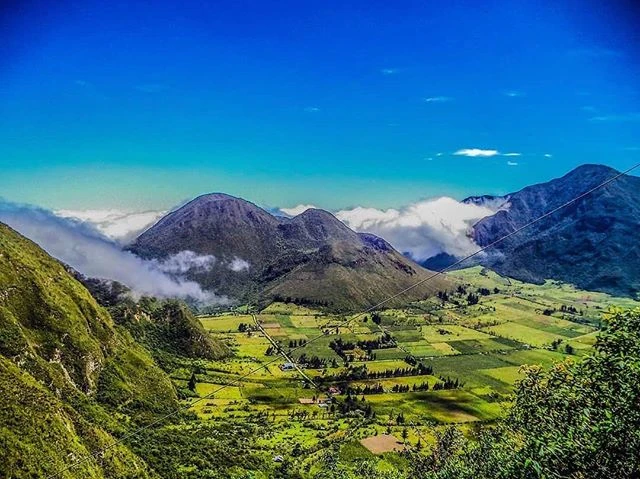
We already mentioned it in our guide to the 10 must-sees in Quito, and it couldn’t be left out here. Pululahua isn’t just a reserve: it’s a place where geology, history, and daily life blend in a way that’s unique on the planet.
It is Ecuador’s only geobotanical reserve, a protection category created specifically for this site to recognize the uniqueness of its volcanic geology. Furthermore, it is one of the very few inhabited volcanic craters in the world: families have lived within its caldera for centuries, cultivating the region’s most fertile volcanic soil (Geophysical Institute, 2026).
Its biodiversity is extraordinary: more than 180 species of birds, wild orchids, bromeliads, giant ferns, and mammals such as deer and armadillos. The Ventanilla viewpoint, from which the entire caldera can be seen, offers one of the most breathtaking views in the province of Pichincha (Pululahua, 2026).
📍 Distance: 35 min north of Quito
Reserva Geobotánica Pululahua (2023)
3. Pasochoa Wildlife Refuge
The forest that survived in the heart of the inter-Andean valley
Oleg Galeev(2024)
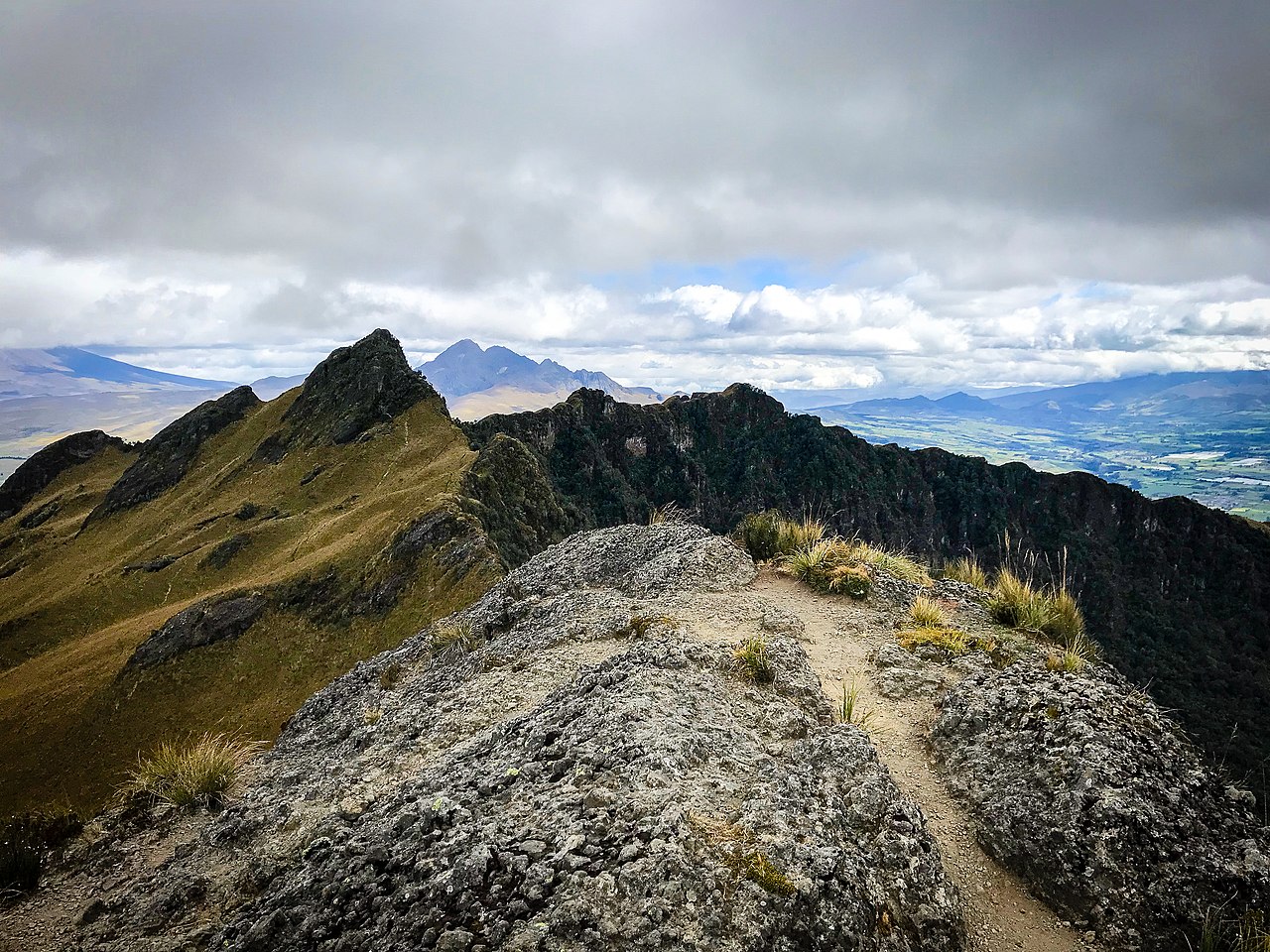
45 kilometers southeast of Quito, in the Mejía canton, Pasochoa is one of the most valuable and least-known corners of the province of Pichincha. This extinct volcano preserves within its collapsed caldera one of the last remnants of the original Andean forest of the inter-Andean corridor, an ecosystem that has almost completely disappeared from the rest of the valley (Pasochoa, 2026).
With 126 documented bird species, including 12 found exclusively in the Northern Andes, it is a paradise for birdwatching. Its trails wind through lush ravines and páramo zones, with options for all skill levels. Camping is also permitted within the refuge (Pichincha es Turismo, 2023). BirdLife International has designated it an Important Bird Area (IBA), one of the most significant recognitions in global bird conservation.
📍 Distance: 45 min southeast of Quito
4. Antisana National Park
Condors, glaciers, and the loneliest volcano in the Andes
Turismo Ecuador (2025)
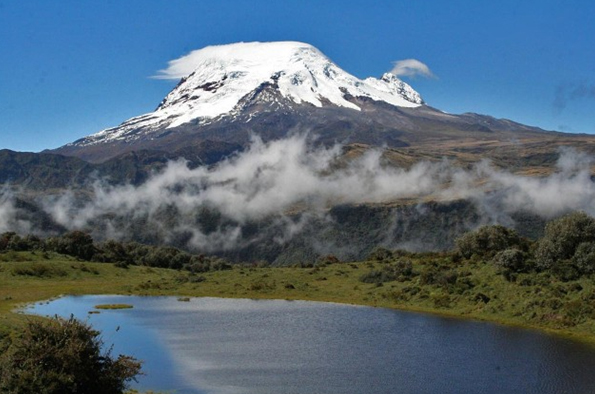
Antisana is one of those places that reminds you just how small you are. The volcano, standing 5,753 meters tall, is potentially active and remains covered in glaciers that feed the rivers supplying water to Quito. Surrounding it are 120,000 hectares of páramo and protected Andean forest (Ministry of Tourism, 2026). It is home to one of Ecuador’s most visible populations of Andean condors; pumas, spectacled bears, white-tailed deer, and more than 481 recorded bird species also live here.
📍 Distance: 50 km southeast of Quito
5. Yunguilla Cloud Forest
Community, Charcoal, and Conservation: A Story of Transformation
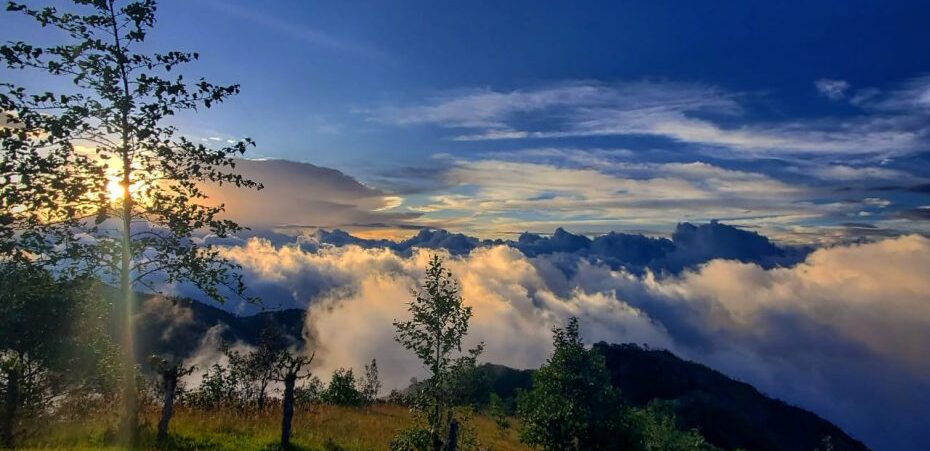
Yunguilla is much more than a nature reserve: it is a life lesson on how a community can change its history. This picturesque village northwest of Quito was, for decades, a community of charcoal producers who deforested the forest to survive. Today, it is one of Ecuador’s most recognized models of sustainable community-based tourism (Yunguilla Community, 2026).
Its residents, led by local families themselves, have shifted their economy toward conservation: they protect the cloud forest that surrounds them and grow coffee and cacao organically. Activities include forest hikes, natural water slides, artisanal chocolate and coffee making, and community gatherings. An experience that truly connects you with the people and land of Ecuador.
📍 Distance: 1 hour northwest of Quito
Yunguilla (2026)
6. Pahuma Reserve
Orchids and rare birds in the protected forest of the northwest
Pahuma is the closest private reserve to Quito for those seeking top-tier birdwatching in a cloud forest. Located one hour northwest of the city, it protects 1,200 hectares of montane forest at altitudes between 1,800 and 2,800 meters (Pichincha es Turismo, 2025).
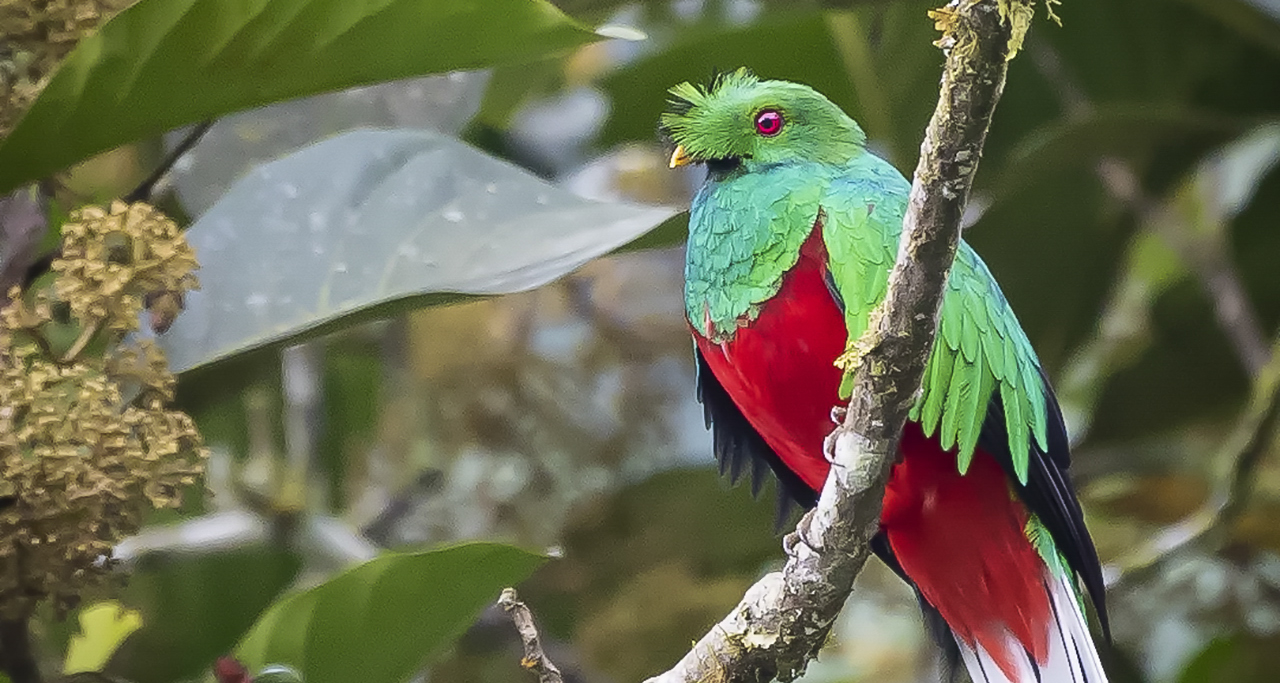
It is one of the few places where you can spot the crested quetzal, also known as the white-tailed quetzal, one of the most beautiful birds and a favorite among birdwatchers worldwide. The rock cock, the Andean toucan, and around 200 recorded species in total also call this place home.
📍 Distance: 1 hour northwest
Julie Watson (2024)
7. Molinuco Ecological Refuge
Adventure, nature, and rural life just outside Quito
Pichincha es Turismo (2025)
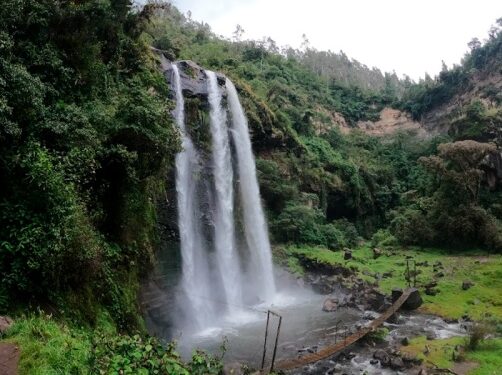
Molinuco is the ideal destination for those who want to experience nature without straying too far from the city. Activities include hiking along trails with native flora, birdwatching, and horseback riding. Surrounded by traditional crops, farm animals, and views of the volcanoes, it creates that authentic atmosphere so valued by travelers seeking to escape the conventional tourist circuit (Refugio Molinuco, 2026).
📍 Distance: 30–40 min from Quito
8. Bellavista Cloud Forest
The best birding destination near Quito a paradise for the senses
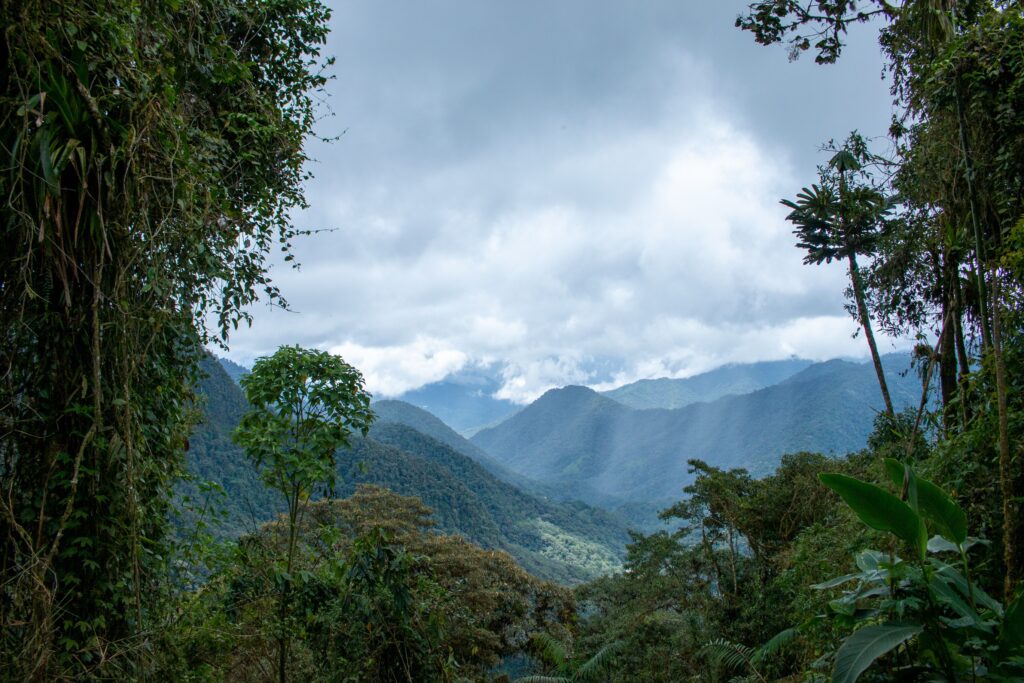
If there’s one place in the Quito area that nature-loving travelers always mention first, it’s Bellavista. This private cloud forest, an hour northwest of Quito, is a world-renowned destination for birdwatching and welcomes visitors from every continent who come specifically to observe birds.
The reason is simple: its location on the “Hummingbird Trail” of the old Nono-Mindo road allows it to boast exceptional bird biodiversity, with over 330 documented species. It features hummingbird feeders that attract up to 25 species simultaneously, a visual experience that is difficult to describe in words (Bellavista Cloud Forest, 2026).
📍 Distance: 1 hour northwest of Quito
MigueartUIO (2024)
Why this matters and why you can be a part of it too
Ecuador is home to 20% of the world’s bird species on just 0.2% of the Earth’s land surface. Quito, with more than 540 bird species in the Metropolitan District alone, is one of the world’s most biodiverse urban capitals. These reserves are the shield that protects all of this.
Every responsible visit is a vote for conservation. Well-managed ecotourism generates income for the communities that care for these areas, makes it worthwhile to preserve them, and demonstrates that living nature is more valuable than cleared land.
From the Rincón Familiar Hostel Boutique in Quito’s Historic Center, you’re just steps away from humanity’s cultural heritage and minutes away from everyone’s natural heritage. Talk to our team at the front desk—we’ll help you organize your excursion, recommend responsible tour operators, and make the most of every day of your stay.
Quito awaits you. Both Quito´s.
About The Author: Admin
More posts by admin